B2B Video Testimonials: The Complete Playbook
How to get B2B video testimonials from enterprise clients — handling approvals, legal concerns, featuring logos and titles, and using them to close more deals.
Pavel Putilin
Founder
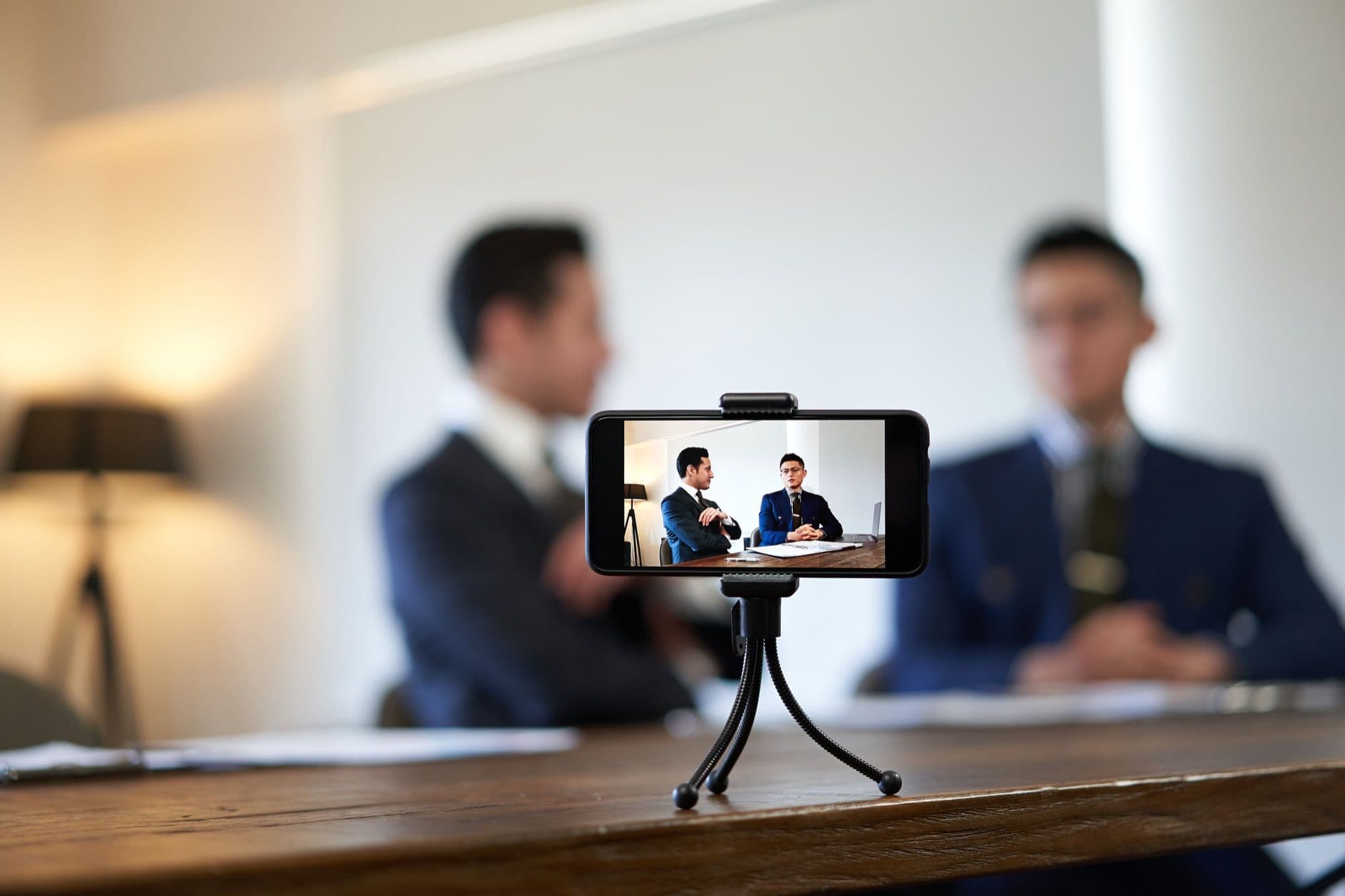
Getting a consumer to record a 60-second video about their favorite productivity app is one thing. Getting a VP of Engineering at a Fortune 500 company to go on camera endorsing your platform is an entirely different challenge.
B2B video testimonials are the single most effective sales asset in enterprise software — and the hardest to get right. Legal teams get involved. Branding guidelines create restrictions. Busy executives don't have time. And even when someone agrees, the result can end up stiff, scripted, and unconvincing.
I've worked with hundreds of B2B companies through VideoTestimonials, and the ones that consistently produce great B2B testimonials follow a specific playbook. This is that playbook — from identifying the right customers to ask, to navigating corporate approval processes, to deploying the finished videos across your sales funnel.
Why B2B Video Testimonials Are Worth the Effort
Let's start with why this matters enough to fight through the complexity.
In B2B sales, the buyer's journey is long, committee-driven, and risk-averse. A typical enterprise deal involves 6-10 decision-makers, takes 3-9 months to close, and requires the buyer to justify their choice to multiple stakeholders.
Video testimonials from recognizable companies address this dynamic directly:
- They compress trust-building. A 90-second video from a peer at a similar company does what 3-4 sales calls would otherwise need to accomplish.
- They travel through organizations. When your champion shares a testimonial video with their CFO or CTO, it carries more weight than any sales deck. The video does the internal selling for you.
- They neutralize risk perception. The biggest objection in enterprise sales isn't "your product isn't good enough" — it's "what if this goes wrong?" Seeing another enterprise succeed eliminates that fear.
- They differentiate in competitive deals. When three vendors look similar on feature comparisons, the one with a video from Shopify's Head of Growth talking about their results wins.
The ROI data backs this up. B2B companies using video testimonials in their sales process report 20-35% shorter deal cycles and 15-25% higher close rates on competitive deals. For a deeper look at the numbers, see our breakdown of video testimonial ROI.
Stop losing customers to weak social proof
VideoTestimonials lets you collect, manage, and embed video + text testimonials in minutes. Free for 7 days, no credit card.
The B2B Approval Problem (And How to Solve It)
The number one reason B2B companies struggle with testimonials isn't that customers don't want to help. It's that corporate approval processes kill momentum.
Here's what typically happens: your champion at the customer company enthusiastically agrees to record a testimonial. They mention it to their marketing team. Marketing says it needs legal review. Legal says they need to see the questions in advance, review the final video, and may need 4-6 weeks for approval. By the time everyone aligns, the momentum is gone and the project quietly dies.
How to Navigate Corporate Approvals
Start the conversation early. Don't wait until you need the testimonial. Plant the seed during onboarding or at the first major success milestone. Say something like: "If things continue going this well, would your team be open to doing a short customer story video down the road?" Getting a soft yes early makes the formal ask easier later.
Provide a complete approval packet. When you make the formal request, don't just ask "can you do a testimonial?" Instead, send a one-page document that includes:
- The specific questions you'll ask (no surprises)
- A clear statement that they'll review and approve the final video before publication
- Where the video will be used (your website, sales materials, social — be specific)
- The time commitment (usually 15-20 minutes of their time)
- A sample testimonial video from another customer so they can see the tone and format
This packet gives your champion everything they need to get internal buy-in. They can forward it directly to legal and marketing without translation.
Offer co-branding. Many B2B companies are more willing to participate when the testimonial doubles as content they can use too. Frame it as a joint case study rather than a one-sided endorsement. "We'd love to create a customer success story featuring your team's results — you'd get the video and a written case study for your own marketing."
Accommodate restrictions gracefully. Sometimes legal says no to using the company name but yes to using the person's name and title. Sometimes they approve everything except showing the product interface. Work with whatever they allow. A testimonial from "Sarah Chen, Director of Revenue Operations at a Fortune 100 retail company" is still extremely valuable — especially with her face on camera.
Use tiered consent forms. Create a simple release form with checkboxes:
- You may use my name and title
- You may use my company name
- You may use my company logo
- You may use this video on your website
- You may use this video in paid advertising
- You may use clips from this video on social media
This lets the customer's legal team approve exactly what they're comfortable with, rather than facing a binary yes/no on everything. It dramatically increases approval rates.
Who to Ask: Identifying Your Best B2B Testimonial Candidates
Not every happy customer makes a good testimonial candidate. In B2B, you want to be strategic about who you approach.
The Ideal B2B Testimonial Candidate
- Recognizable company or impressive title. Name recognition matters in B2B. A testimonial from "Head of Growth at Stripe" moves needles in a way that "Marketing Manager at a 12-person agency" doesn't (no offense to 12-person agencies).
- Quantifiable results. "We love the product" is nice. "We reduced churn by 34% in the first quarter" is powerful. Prioritize customers who can speak to specific metrics.
- Strong internal champion. You need someone who is both enthusiastic about your product AND has the organizational capital to push a testimonial through approval.
- Matches your target ICP. The most effective testimonials come from companies that look like the prospects you're trying to close. Same industry, similar size, comparable use case.
- Comfortable on camera. This one's underrated. Some brilliant executives are terrible on video — they freeze, speak in corporate jargon, or come across as rehearsed. If you've had video calls with the customer, you already have a sense of who's natural on camera.
When to Ask
Timing matters enormously. The best windows for asking are:
- Right after a major win. They just hit a milestone with your product. Energy and goodwill are at peak levels.
- During a renewal or expansion. They've just committed to continuing the relationship. This is an implicit endorsement — make it explicit.
- After they give you a high NPS score. If someone rates you a 9 or 10, immediately follow up with the testimonial request. They've already told you they'd recommend you.
- At your user conference or event. If you're both at the same event, the logistics become trivial. "While we're both here, could we grab 10 minutes for a quick video?"
For specific ask scripts and email templates, our guide to asking for testimonials has dozens of templates you can adapt.
Structuring the B2B Video Testimonial
B2B testimonials need more structure than B2C ones. Your audience is analytical and skeptical. They want specifics, not vibes.
The Framework That Works
I recommend a five-part structure for B2B testimonials. You don't need to follow it rigidly, but hitting these beats produces the most effective videos:
1. Context (15-20 seconds) Who are you, what's your role, and what does your company do? This establishes credibility immediately. "I'm James Park, VP of Customer Success at Dataflow. We're a data integration platform serving mid-market SaaS companies."
2. The Problem (20-30 seconds) What challenge were you facing before? Be specific. "We were losing 8-10 hours per week per CSM on manual data entry. Our team was spending more time updating spreadsheets than talking to customers."
3. Why This Solution (15-20 seconds) What made you choose this product over alternatives? "We evaluated four platforms. What stood out was the Salesforce integration — it was the only one that synced bi-directionally without custom development."
4. The Results (30-40 seconds) What has changed since implementation? Use numbers. "Within 60 days, we reduced manual data work by 85%. Our CSMs are now handling 40% more accounts each, and our NPS jumped from 32 to 51."
5. The Recommendation (10-15 seconds) Who would you recommend this to? "If you're running a CS team of 10+ people and drowning in manual workflows, this is a no-brainer."
Total runtime: 90-120 seconds. That's the sweet spot for B2B — long enough to be substantive, short enough to hold attention.
Questions to Send in Advance
Send your testimonial candidate 4-5 questions ahead of time. Not a script — questions. You want them to answer naturally, not read from a teleprompter. Here are the ones that consistently produce the best B2B content:
- Can you briefly describe your role and what your company does?
- What was the biggest challenge you were facing before using [product]?
- What made you choose [product] over other options you considered?
- What specific results have you seen since implementing [product]?
- Who would you recommend [product] to, and why?
Tell them: "Don't memorize answers. Just think about these questions beforehand. We'll have a casual conversation and it'll feel natural."
Recording: Remote vs. On-Site
For most B2B testimonials in 2026, remote recording is the default — and it produces excellent results. For a deep dive on the complete guide to creating these videos, check out our complete guide to video testimonials.
When Remote Works Best
- Customer is in a different city/country
- Budget is limited
- You need to produce testimonials at scale (5+ per quarter)
- The customer prefers the convenience
When On-Site Is Worth It
- The customer is a marquee logo (top 5% of your customer base)
- You want to show their office/team/environment
- You're producing a flagship case study video
- You're already visiting for another reason (QBR, conference, etc.)
Remote Recording Tips for B2B
B2B testimonials recorded remotely can look just as professional as on-site productions if you set your customer up for success:
- Send a preparation guide 48 hours before. Include lighting tips (face a window), background advice (clean, professional), and audio tips (quiet room, no echo).
- Use a dedicated recording platform. Don't just hop on a Zoom call and hit record. Use a tool designed for testimonial recording that captures high-quality local video.
- Do a tech check. Five minutes before the real recording, confirm their camera, audio, and lighting look good. Adjust as needed.
- Record each answer separately. This makes editing dramatically easier. Ask one question, let them answer, pause, then move to the next.
- Get extra B-roll footage. Ask them to share their screen showing your product in action, or to do a brief "walking through the office" clip. This gives you editing flexibility.
Featuring Logos, Titles, and Company Information
In B2B, the visual credibility signals matter as much as the words spoken. Here's how to maximize them:
Logo Walls
Create a "trusted by" logo section on your website featuring every company that's given you a testimonial. This is often the first thing enterprise buyers look at. Even before they watch a single video, seeing logos of companies they respect creates an immediate trust signal.
Title Cards
Every B2B testimonial video should include a professional title card showing:
- Full name
- Job title
- Company name
- Company logo (if approved)
Display this in the first 3 seconds of the video and again at the end. Viewers who skip through should still see who's speaking.
Industry Tagging
Organize your testimonials by industry, company size, and use case. When a prospect from healthcare lands on your testimonial page, they should be able to filter to see only healthcare testimonials. This relevance matching is one of the biggest drivers of testimonial effectiveness in B2B.
Deploying B2B Testimonials Across the Sales Funnel
Creating the video is half the battle. Deploying it effectively is the other half.
Top of Funnel (Awareness)
- Homepage hero section: Feature your strongest testimonial with the most recognizable logo.
- Social media clips: Cut 15-30 second highlight clips for LinkedIn. B2B buyers live on LinkedIn.
- Blog content: Embed relevant testimonials within blog posts that address the same problem the testimonial discusses.
Middle of Funnel (Evaluation)
- Product pages: Match testimonials to specific features or use cases described on each page.
- Comparison pages: When prospects are evaluating you against competitors, testimonials from customers who switched from that competitor are gold.
- Webinars and events: Feature customer speakers or play testimonial clips during presentations.
Bottom of Funnel (Decision)
- Sales follow-ups: After a demo, your AE sends a relevant testimonial video. "I thought you'd find this relevant — [Company] had a similar setup to yours."
- Proposal documents: Embed testimonial clips or link to them in your proposals.
- Security/compliance reviews: If a testimonial specifically mentions your security posture or compliance certifications, share it during the security review phase.
Post-Sale (Expansion)
- Onboarding emails: Show new customers how similar companies succeeded. Sets expectations and accelerates time to value.
- Upsell conversations: Testimonials from customers who expanded their usage are powerful proof points during expansion discussions.
Handling Common B2B Objections
Even with the best approach, you'll encounter resistance. Here's how to handle the most common objections:
"Our legal team won't approve it." Response: "Totally understand. We have a flexible release process — your legal team can approve exactly what they're comfortable with. And you'll have full approval rights over the final video before anything is published. Can I send over our standard release form so they can review it?"
"I don't have time." Response: "It's genuinely 15 minutes. We handle everything — I'll send you 4 questions in advance, we hop on a quick video call, and you just talk naturally about your experience. No preparation needed beyond reading the questions."
"We don't do testimonials for vendors." Response: "I hear you. Would you be open to a joint case study instead? We'd frame it as a customer success story that showcases your team's innovative approach. You'd get the content for your own marketing too."
"Can we just do a written quote instead?" Response: "Absolutely, we'd love a written quote too. But I've found that video testimonials get 3-5x more engagement, which means more people hear about the great work your team is doing. Would you be open to trying a quick video? If you're not happy with how it turns out, we won't use it."
Building a Sustainable B2B Testimonial Program
One-off testimonials are good. A systematic program is transformative. Here's how to build one:
- Set a quarterly goal. Start with 2-3 new testimonials per quarter. Scale to 5+ as your process matures.
- Make it part of CS workflows. Your customer success team should have testimonial requests built into their QBR and renewal playbooks.
- Create a testimonial brief for sales. Your sales team should know exactly which testimonials exist, organized by industry, company size, and use case. Make it searchable.
- Refresh annually. Results grow over time. Re-record your best testimonials every 12-18 months to capture updated metrics.
- Celebrate customers who participate. Feature them in your newsletter, invite them to your advisory board, send a thoughtful gift. Make it feel like a VIP experience, not a favor.
The Bottom Line
B2B video testimonials are harder to produce than consumer testimonials. There are more stakeholders, more restrictions, and more logistics. But the payoff is proportionally larger. A single strong testimonial from a recognizable company can influence millions of dollars in pipeline.
The companies that win at B2B testimonials don't treat them as a marketing side project. They build a systematic program, make the ask easy, navigate approvals proactively, and deploy the finished videos across every stage of their sales funnel.
Start with your three happiest enterprise customers. Send them the approval packet. Record the first video this month. The hardest part is starting — after that, momentum builds quickly.
Pavel Putilin
·FounderFounder of VideoTestimonials. Passionate about helping businesses build trust through authentic customer stories and video social proof.
Frequently asked questions
How do you get B2B video testimonials past a client's legal team+
Send a complete approval packet up front that lists the exact questions, states that they approve the final video before publication, and specifies where it will be used. Use a tiered consent form with checkboxes so their legal team can approve exactly what they are comfortable with — name and title, company name, logo, website use, paid ads — rather than facing an all-or-nothing decision. This granular approach dramatically increases approval rates.
What if a client's legal team says no to using the company name+
Work with whatever they allow. A testimonial attributed to a Director of Revenue Operations at a Fortune 100 retailer is still highly persuasive, especially with the person's face on camera and their real title. Accommodating restrictions gracefully keeps the testimonial alive instead of losing it to an all-or-nothing request.
How long should a B2B video testimonial be+
The sweet spot is 90 to 120 seconds. That is long enough to cover a five-part arc — context, the problem, why they chose you, quantified results, and a recommendation — but short enough to hold a busy buyer's attention. Send the customer four or five questions in advance so their answers feel natural rather than scripted.
How do B2B video testimonials help close deals+
A short video from a peer at a similar company compresses trust-building that would otherwise take several sales calls, and it travels internally when your champion forwards it to other stakeholders. Companies using video testimonials in their sales process report shorter deal cycles and higher win rates on competitive deals. Matching the testimonial to the prospect's industry and company size makes it far more effective.
Related Glossary Terms
Annual Recurring Revenue (ARR)
The annualized value of recurring subscription revenue, calculated as MRR multiplied by twelve.
Authority Bias
The tendency to attribute greater accuracy and trustworthiness to the opinion of an authority figure.
Customer Endorsement
A public statement of support from a customer, often featuring their name, title, and company for credibility.
Quarterly Business Review (QBR)
A structured meeting between a vendor and customer to review progress, value delivered, and future goals.
Social Selling
Using social media platforms to find, connect with, and nurture potential customers through relationship building.
Related Articles
Related Articles

From Happy Customer to Brand Ambassador: Building a Testimonial Flywheel
Learn how to transform satisfied customers into brand ambassadors through a testimonial flywheel. Covers identification, community building, perks, and content creation.

How to Build a Customer Reference Program That Fuels Sales
A complete guide to building a customer reference program. Covers program structure, recruiting references, managing reference calls, and tracking results.

Video Testimonial Permission and Legal Guide: What You Need to Know
A practical guide to testimonial permissions, release forms, GDPR compliance, and usage rights — so you can use customer testimonials with confidence.

Build trust.
Drive revenue.
Stop losing customers to a lack of social proof. Start collecting and showcasing high-converting testimonials today.